
A basic guide to nutrition & PCOS
Trying to figure out how to eat after being diagnosed with PCOS can be overwhelming. If you open social media, you'll probably be told to cut out all carbs, cut out dairy and gluten, avoid fruit because it can spike your blood sugar, and never consume sugar again. It can be hard to cut through all of the noise, especially as what might work for one person might not work for another.
This is why the key to understanding nutrition when you have PCOS is to focus on what can help and support your body and hormones long-term. This article will give you some of the most basic things you need to know about how to eat to support hormonal health and well-being while also helping you understand some of the science behind it all.
PCOS and insulin resistance
PCOS has now been renamed PMOS (Polyendocrine Metabolic Ovarian Syndrome), as officially announced in The Lancet in May 2026. One of the reasons the name has been changed is to highlight the metabolic nature of the syndrome, which is most likely to manifest as insulin resistance.
It is for this reason that nutrition is one of the most powerful tools you have when it comes to managing PCOS. Studies suggest that between 50% and 75% of women with PCOS experience some degree of insulin resistance. Insulin is a hormone that helps regulate blood sugar (glucose) levels. With insulin resistance, the body's cells become less responsive to insulin. To compensate, the pancreas produces more insulin, but blood glucose remains harder to regulate over time, leading glucose to build up in the bloodstream instead.
This is what raises the risk of type 2 diabetes and drives the hormonal imbalances (like elevated androgens) that cause symptoms like irregular periods, weight gain, acne, and hair thinning. It is also the reason why weight loss can feel so challenging with PCOS. You may be eating less, exercising more, and still struggling with weight or energy. Understanding the role of insulin resistance shifts the conversation away from willpower and towards physiology. A big part of that is understanding that what you eat directly affects how your body responds to insulin. Making intentional shifts in your diet can reduce resistance, lower inflammation, and help your hormones find their baseline.
Once you understand the role insulin plays, the dietary recommendations begin more sense. Rather than a list of food rules, they're all working towards the same goal: improving insulin sensitivity, reducing inflammation.
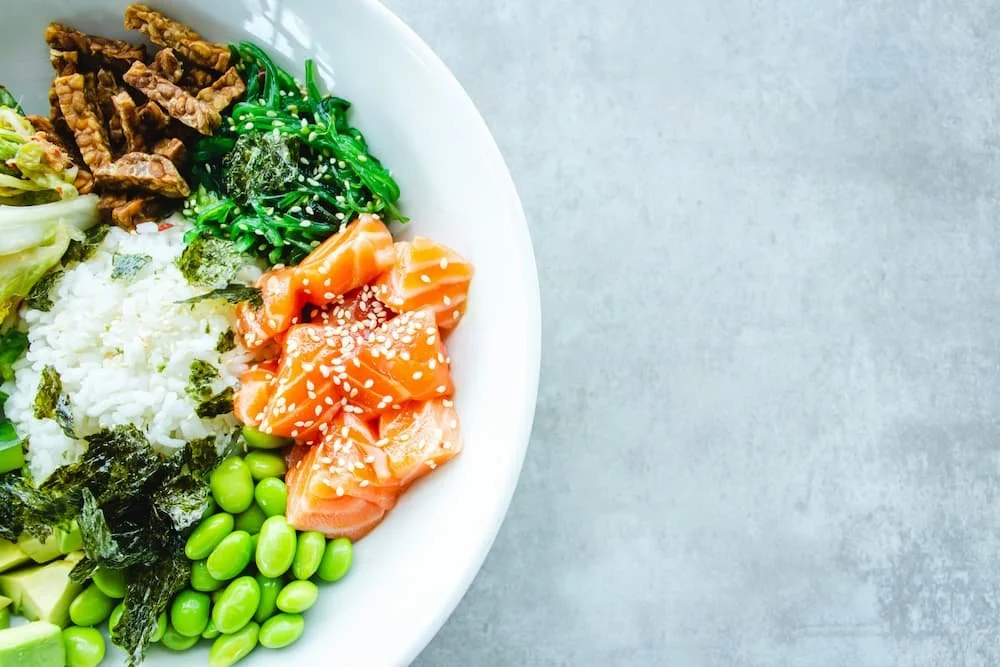
Eating for hormonal harmony means eating for nourishment and mind-body-hormonal balance.
It is not about endless dieting and extreme restriction but about building a sustainable way of eating that supports your mind and body over time.
7 nutritional principles for PCOS
1. Prioritise protein
Protein is essential for blood sugar stability since it slows gastric emptying, meaning glucose enters the bloodstream more gradually, reducing the demand for insulin. Over time, this consequently improves insulin sensitivity.
Build every meal around a quality protein source:
Eggs
Chicken
Beef
Fish
Legumes
Tofu
Aim for 25–30 grams of protein per meal.
Many protein bars are highly processed and can contain significant amounts of added sugar, so it's generally better to prioritise whole-food protein sources whenever possible.
2. Eat complex carbohydrates / limit refined carbohydrates
One of the most common pieces of advice given to people with PCOS is to cut back on carbohydrates. However, it is important to differentiate between refined and complex carbohydrates. Limiting highly refined carbohydrates such as white rice, white bread, pastries, and foods made with refined flour can help reduce blood sugar spikes and support insulin sensitivity.
Highly refined carbohydrates should instead be replaced with complex carbohydrates, which are high in fibre, which slow down digestion, and they also prevent the blood sugar spikes that worsen insulin resistance. Studies have also suggested that dietary fibre may improve PCOS partly through changes to the gut microbiome.
Examples of complex carbs you can easily add to your diet:
Sweet potatoes
Quinoa
Brown rice,
Whole grain bread and pasta, barley
Legumes like chickpeas and black beans
If you choose to eat white rice, pairing it with protein, vegetables, and healthy fats slows digestion and helps reduce its overall glycaemic impact.
Another simple strategy is to cook the rice (white or brown) and allow it to cool before eating it. Cooling increases the formation of resistant starch, which can lower the meal's glycaemic response compared with freshly cooked rice.
3. Add colour to your plate
Eat the rainbow through a variety of non-starchy vegetables - these are vegetables that are naturally low in sugar, rich in fibre, and packed with vitamins, minerals, and antioxidants that support overall hormonal health. Examples include:
Broccoli
Tomato
Eggplant
Zucchini
Carrots
Peppers
Cabbage
Beetroot
Leafy greens
Leafy greens such as spinach and kale are rich in magnesium, which helps increase insulin sensitivity. Cruciferous vegetables like broccoli and cauliflower support the body's natural oestrogen metabolism, helping the liver clear excess hormones more efficiently.
Aim to make vegetables the foundation of your lunch and dinner, filling at least half your plate with a variety of colourful options.
4. Limit ultra-processed food and sugar / prioritise whole foods
Ultra-processed foods are often high in refined sugars, refined flours, unhealthy fats, and additives that can contribute to inflammation and rapid blood sugar spikes. For someone with PCOS, these fluctuations can make insulin resistance harder to manage and may worsen symptoms such as fatigue, cravings, acne, and weight gain.
Instead, choose foods that look close to how they exist in nature: vegetables, fruit, eggs, legumes, whole grains, nuts, seeds, fish, and unprocessed meats.
This doesn't mean you need to eliminate every processed food or never enjoy dessert again. Rather than striving for perfection, aim to make whole foods the foundation of your diet most of the time. The occasional takeaway meal or slice of cake won't undo your progress. Hormonal health is shaped by your overall eating pattern, not by a single meal.
5. Prioritise healthy fats
Fats have a bad reputation due to their caloric density, however, the right kinds of fat are essential for hormone production.
Your body uses fatty acids to manufacture hormones; healthy fats provide the building blocks needed for hormone production and help create an internal environment that supports hormonal balance.
Healthy fats also play a key role in reducing inflammation, one of the underlying drivers of PCOS symptoms such as irregular cycles, acne, and insulin resistance.
Examples of foods you can add to your diet include:
Avocado
Olive oil
Fatty fish (salmon, sardines)
Nuts
Seeds
Omega-3 fatty acids in particular have been shown to reduce testosterone levels and improve menstrual regularity.
6. Keep blood sugar stable throughout the day
Keeping blood sugar stable is one of the most effective ways to support PCOS management. Long gaps between meals can often lead to dips in energy followed by overeating later, which may contribute to greater blood sugar fluctuations. It is also best not to snack in between meals as this can cause blood sugar spikes throughout the day. Giving your body time between meals allows insulin levels to fall before the next meal, rather than remaining elevated throughout the day.
Aim for regular, balanced meals every 3–5 hours. Aim to pair carbohydrates with protein and fat, as this slows glucose absorption and prevents spikes.
7. Nourish / Don’t restrict
PCOS means that the body is a lot more sensitive to restriction. Restriction can worsen symptoms, as chronic dieting can raise cortisol levels and even lead to blood sugar crashes that can be challenging to deal with. Even if restriction worked for you before, PCOS makes that a lot harder now.
Eating for hormonal harmony means tuning into your body and listening to what it needs. There might be days when you won’t want to eat 30 grams of protein for dinner, and that’s okay. What matters more is consistency; if you’re eating enough protein, complex carbs, and whole foods on a day-to-day basis, then the off days won’t matter too much. Your body will naturally adapt to this new way of eating.
Eat slowly, tune into your natural hunger and fullness cues, and aim to approach food as a form of nourishment rather than control or punishment.
Conclusion
PCOS often leaves people feeling as though their bodies are working against them. Nutrition won't cure everything, but it can help restore a sense of balance and partnership with your body. Every meal is another opportunity to improve insulin sensitivity, support hormone production, and reduce inflammation.
Stabilise insulin, reduce inflammation, support the liver, and eat enough. Prioritize protein, complex carbohydrates, non-starchy vegetables, healthy fats, and whole foods. These are the guidelines surrounding eating for hormonal health. On a practical level, this can look like having chicken breast, sweet potato, broccoli, cauliflower, and spinach, with a drizzle of olive oil, as a staple lunch or dinner meal. This is just one example of an easy meal to make that follows these guidelines. Ultimately, the goal is not a strict, rigid diet, but a way of eating that supports both your physiology and blood sugar levels while also supporting your relationship with food.
Citations
Zawadzki, J.K. et al. / Legro, R.S. et al. (2004). Prevalence of insulin resistance in PCOS using HOMA-IR measurement. PubMed. https://pubmed.ncbi.nlm.nih.gov/15866584/
Nadjarzadeh, A. et al. (2013). The effect of omega-3 supplementation on androgen profile and menstrual status in women with PCOS: a randomized clinical trial. PMC. https://pmc.ncbi.nlm.nih.gov/articles/PMC3941370/
Rahmati-Dehkordi, F. et al. (2024). Role of omega-3 fatty acids in improving metabolic dysfunctions in PCOS. Nutrients. https://www.mdpi.com/2072-6643/16/17/2961
Shukla, A.P. et al. (2017). Carbohydrate-last meal pattern lowers postprandial glucose and insulin excursions in type 2 diabetes. BMJ Open Diabetes Research & Care. https://pmc.ncbi.nlm.nih.gov/articles/PMC5604719/
Xie, L. et al. (2022). High-fiber diet alleviates heterogeneous phenotypes of PCOS by regulating gut microbiota. PMC. https://pmc.ncbi.nlm.nih.gov/articles/PMC8847200/
Weng, J. et al. (2016). Investigation of the relationship between chronic stress and insulin resistance. PMC. https://pmc.ncbi.nlm.nih.gov/articles/PMC4919480/
Teede H, Khomami M, Morman R et al. Polyendocrine metabolic ovarian syndrome, the new name for polycystic ovary syndrome: a multistep global consensus process The Lancet, 2026; 407, 2329-2339 https://www.thelancet.com/journals/lancet/article/PIIS0140-6736(26)00717-8/fulltext
Alomran S, Estrella ED. Effect of Dietary Regimen on the Development of Polycystic Ovary Syndrome: A Narrative Review. Cureus. 2023 Oct 24;15(10):e47569. doi: 10.7759/cureus.47569.
https://pmc.ncbi.nlm.nih.gov/articles/PMC10595043/
