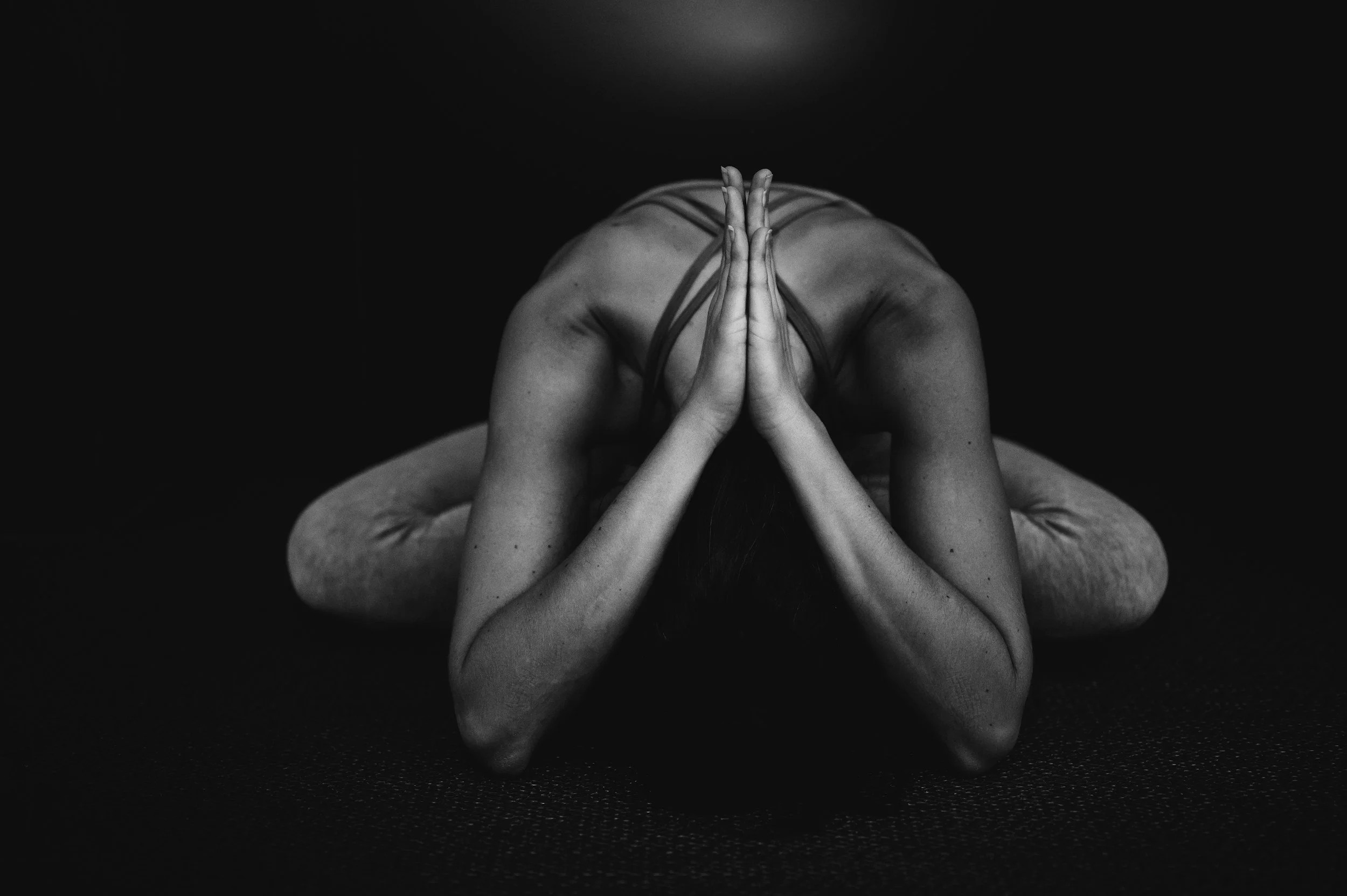
Side-by-Side & Top-Down: on being in relationship with the body
Many women with PCOS are given endless instructions when it comes to how they should eat, how they should move their bodies, what supplements to take, what to cut out, etc. If you have PCOS, you’ve likely scrolled through social media seen a post saying something like this: “I’m sorry to break the news, but if you have PCOS, strength training, cutting out dairy and gluten, eating 1.5 grams of protein per bodyweight, drinking spearmint tea, taking your supplements, and daily cardio do indeed work”. The format often comes with a long list of things to do that usually suggest that if you simply just follow these rules then you will lose weight, “have a snatched waist”, reverse your PCOS symptoms, etc. Most of this advice is well-meaning; many women with PCOS, including myself, have successfully reversed their PCOS due to taking advice seriously and sticking through the journey with discipline and iron will, focusing on nutrition, fitness, and figuring out what works for our bodies.
However, I believe there is something significant missing from the conversation, and that is how to be in the body, in particular, a body that is struggling with hormonal imbalance. What I am questioning is the balance between what we are “meant to do”, how we are “meant to eat”, how we are “meant to move”, and how this can lead us to further disconnect from our bodies, further disconnect from our already disconnected selves, as evidenced by our ongoing struggle with our hormones and our stress levels and our imbalanced selves as evidenced by the presence of PCOS in our lives. And while I use PCOS as a framework to explore this relationship of “doing” and disconnect, I believe it can apply to anyone.
Eating well, moving the body, and commitment to doing what is good for you are essential components of healing hormonal imbalance. Another component is learning how to be in relationship with the body. This is what I explore in this essay through the framework of approaching the body from a top-down/side-by-side lens. The top down approach is the one in which we do where we are “meant to do” - we make sure to eat enough protein, we strength train, do cardio, we take our supplements, and so on. This is the aspect of healing that involves using the mind to will the body. The side-by-side approach is the one in which we focus on being in the body, how does the breath feel? How does pleasure feel in the body? How do you feel in your body? I refer to it as the side-by-side approach because in this state we exist alongside the body, we are not commanding anything of it, we are not using the mind to will the body, unlike in the top-down approach. We just are. This state of being is what brings us closer to our surrendered nature, our natural state of aliveness and presence, leading us to live fuller and bigger lives because we feel safe and open enough to do so. Our bodies are the channel in which we experience life on every level: the mental, the spiritual, the physical. All of life and its experiences are rooted through the body. When we learn to live with the body as a friend, as a lover, we learn how to live alongside our deepest desires, our most wild sense of aliveness. We cannot reach this place through discipline alone, and I argue that when we lean too far into the top-down approach, which is a lot more heavily emphasised in wellness spaces, we can create even further distance and separation from our bodies. To understand the relationship between being in the body, aliveness, and hormonal imbalance, we must look at PCOS beyond the lens of simple biology - as a holistic lens understands that our bodies are always communicating with us through illness and unwellness, and it is up to us to decipher its symbols and messages.
PCOS: a symbolic lens
While referred to as Polycystic ovarian syndrome (now officially Polyendocrine metabolic ovarian syndrome), what is actually happening is that what appears as cysts are actually follicles that failed to release an egg during ovulation. PCOS is “the primary cause of anovulatory infertility, accounting for 80% of such cases”. I believe that this struggle to release the opportunity and creation of life in the body may be viewed as a mirror of a psychic self that struggles to carry life and create within us. We struggle to create life because we are struggling to create and maintain life within ourselves. We are depleted, and thus depleted of the sensation of life and aliveness within us.
This perspective has historically been supported by TCM (Traditional Chinese Medicine). In TCM, PCOS is viewed through the lens of phlegm-damp constitution, which is associated with a sluggish heaviness as a result of internal buildup of stagnant energy and fluids in the body. The immature follicles (referred to as “cysts”) are considered a physical manifestation of this stuck energy, representing that which lives inside of us yet struggles to be released, rooting itself in our bodies instead. In TCM, PCOS is also linked to Liver Qi stagnation, this is because when “energy is tightly bound or bottlenecked due to internal tension, it physically manifests as stagnation in the lower abdomen, directly hindering ovulation.” The Kidney system, or Jing, is also associated with PCOS. As Tu et al eloquently explain, “the Kidney system is the energetic root of reproduction, creation, and constitutional vitality. A deficiency in Jing means the body feels it does not have the core life force to sustain both the self and a new life, resulting in anovulation to preserve what little energy is left.”
PCOS eloquently, although painfully, symbolises the extent of the mind-body-spirit connection and how our bodies attempt to communicate to us through failure, stagnation, breakdown, etc. This is not to create a sense of shame or self-blame towards oneself. We have not failed ourselves or failed our bodies, but what is happening is the result of an imbalance beyond what we can cope with consciously, resulting in a sense of deficiency that is beyond what the mind-body-soul can cope with. While it is not our fault that we are struggling with imbalance, it is our personal responsibility to do what we can to listen to our bodies and tend to them with the love and care that the body deserves.
Side-by-side & top-down
The top-down approach is what gets us the results we want through action, willpower, knowledge, discipline, and self-devotion. The top-down approach helps us care for our bodies in a healthy way, it helps us be in rightful and honorable relationship with discipline, with the knowledge that helps us empower ourselves.
The side-by-side approach is the one in which we see and treat our body as a friend, as a lover. It is not dictating anything upon it, it is not asking whether or not the body is responding how it “should” or not, it is not questioning whether we are doing things right or not. It just is. To love the body as a friend, to love the body as a lover, to be wholly present in feeling and sensation, including the capacity to hold deep and profound presence and pleasure. Expand The side-by-side approach teaches us how to be in relationship with our bodies, which can be so hard for women with PCOS, since we already tend to feel like we are broken, like our bodies are working against us, like there is something we must fix, and if we do all the things we are meant to do, then our bodies will be “fixed” and therefore we will be “fixed”.
When we make more and more rules, this may potentially remove us further from the life within us that is already lacking, that we are already struggling to connect to. Most people with PCOS have bodies that have suffered and endured tremendous stress. This is the connection between sustained high levels of cortisol and PCOS. Our nervous systems are already suffering. The nervous system so often overlooked when it comes to healing and understanding PCOS? Why is tending to the nervous system seen as something we can just sidestep if we are to “do everything right” by following all the rules? Why is the question of why we have PCOS rarely addressed? When we add strict, rigid protocols to help guide us through our symptoms it can create more stress in our lives, it can easily turn into a quest for perfectionism and self-optimisation. We expect that if we do “all the right things” that it will reconnect us to our bodies, that we will learn how to be in relationship with our bodies. This is just one aspect of being in relationship with our bodies. You must also question… how easy it is for you to breathe right now? Really and truly breathe. Try taking three slow, deep inhales and exhales. Just 3. Really sit with them. Does your body tense up at the idea? Do you feel like your mind, your body, is moving too quickly to truly slow down right now? Do you feel a sense of panic, almost? This is also where we sense a relationship to the body. It is in this place that we can learn how to be in relationship to the body through presence, through being. Not just “doing what we are meant to do”.